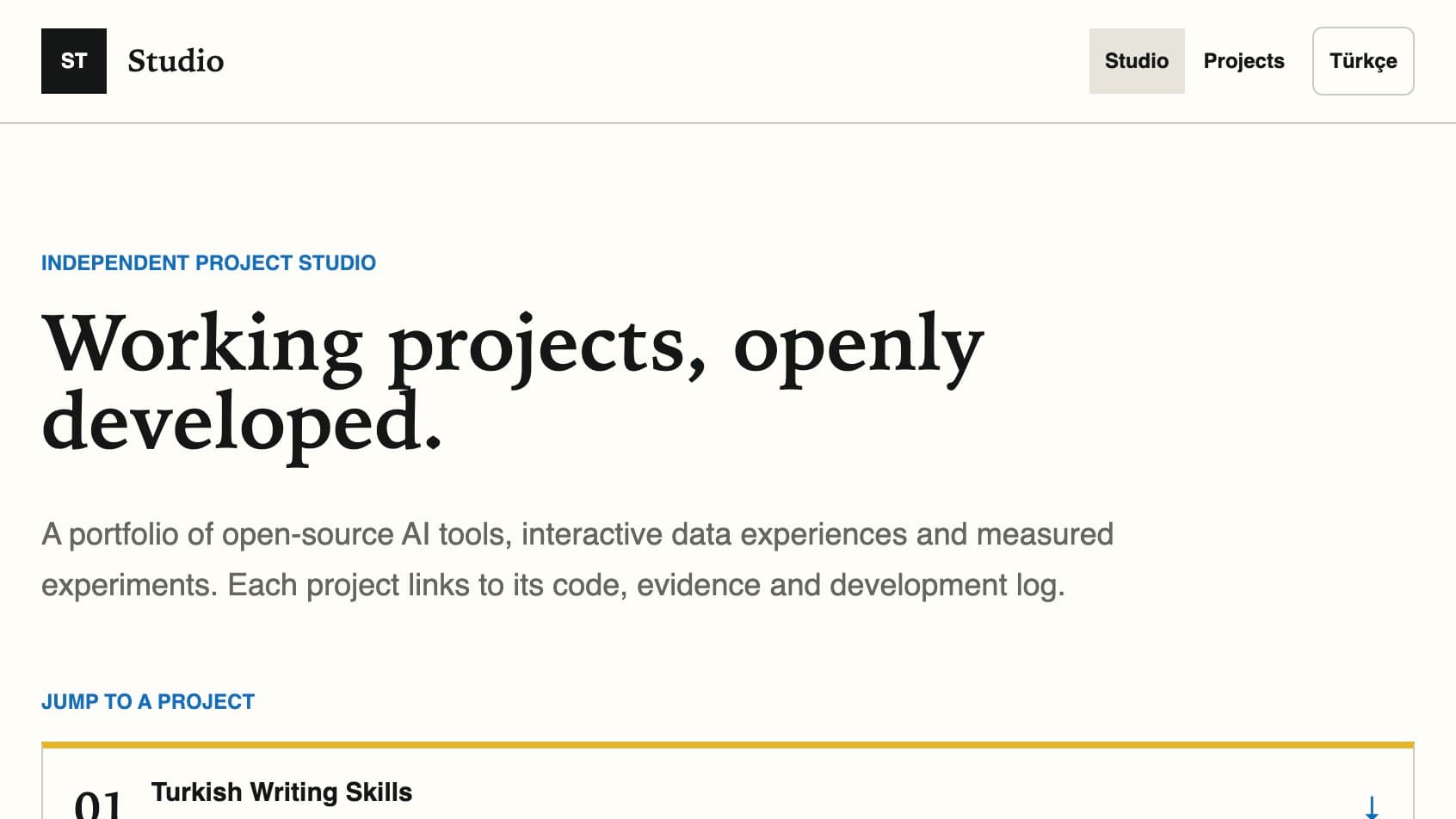
Working projects, openly developed
Studio is not a publication for sharing notes. It is the independent project studio where I develop open-source AI tools, interactive data experiences, and measured experiments. Every project links to its code, evidence, and development log.
Studio follows three principles:
- Every project is developed around its own problem, method, and visual language.
- Live products and local prototypes are clearly distinguished.
- Claims are supported with measurements, sources, and inspectable outputs.
The homepage presents three active projects, their status, and recent developments at a glance. Two projects are live; one remains a local prototype.
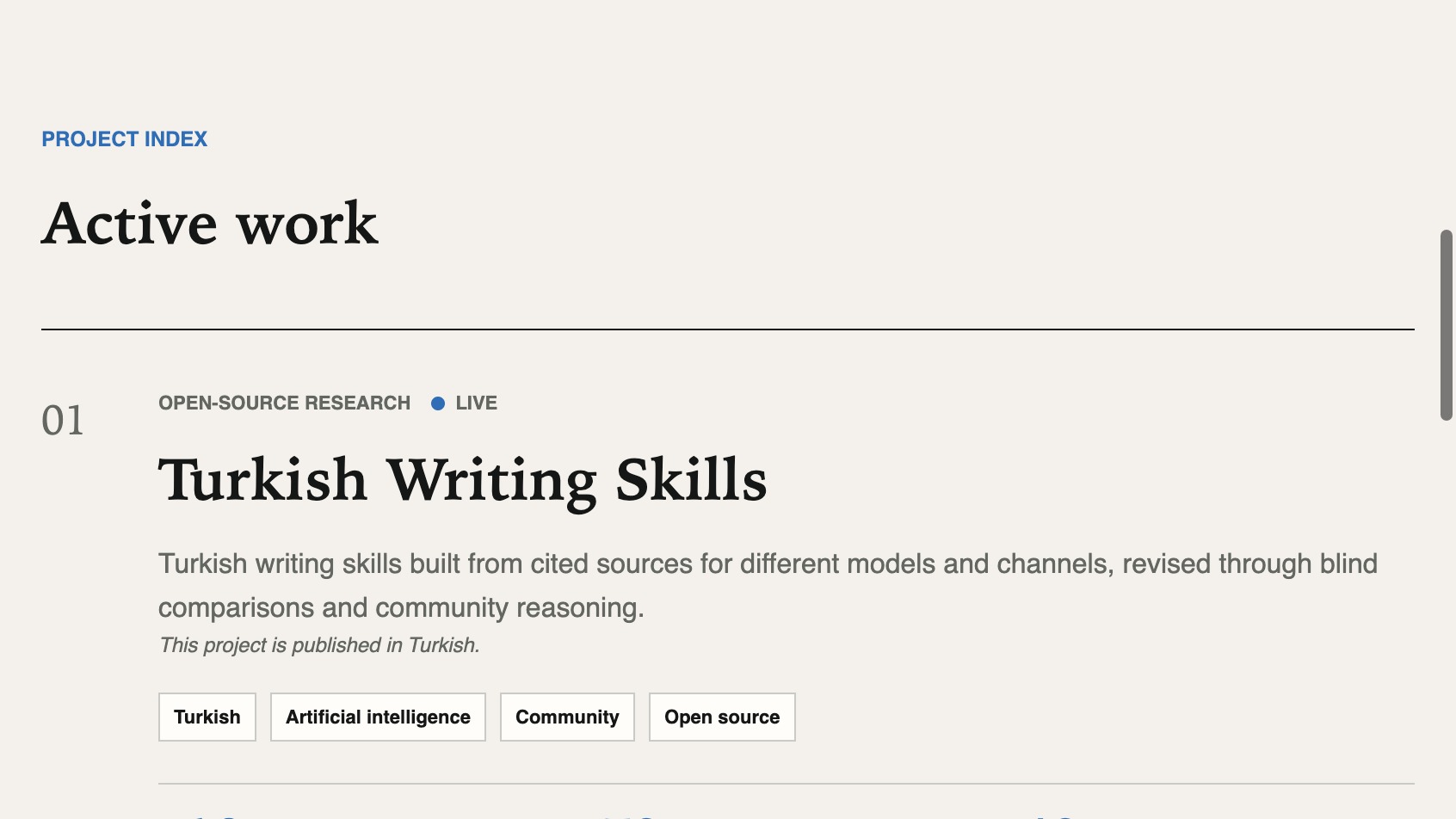
Turkish Writing Skills
Rather than forcing different Turkish writing needs into one general instruction, this live project develops sourced, model-independent skill files for different models and channels. Rules across ten specialist domains are retested through blind comparisons and community reasoning.
- 10 writing domains
- 73 sources reviewed
- 43 sources used directly
World Through Data
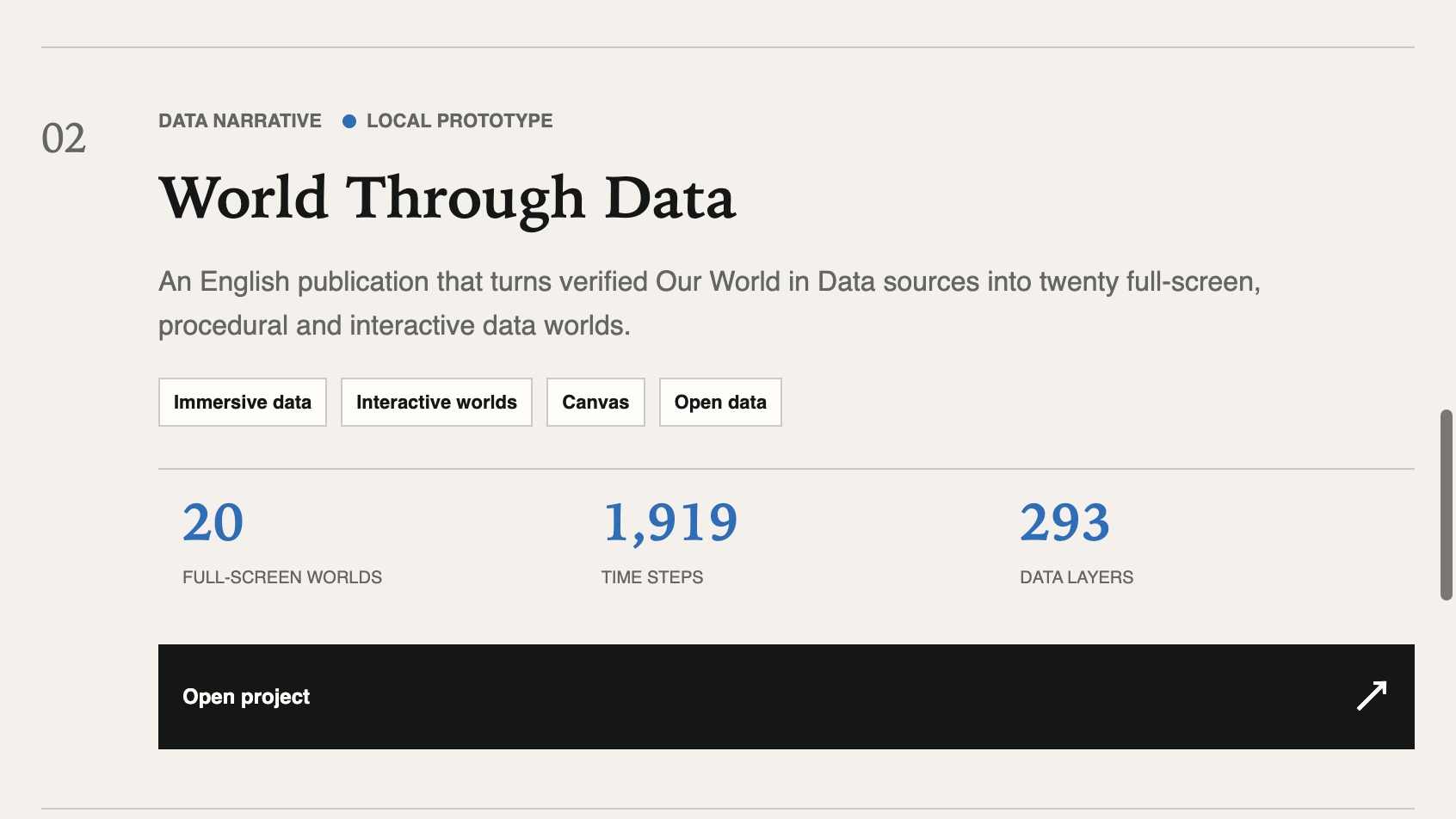
An English project turning verified Our World in Data sources into full-screen, procedural, and interactive data worlds. Instead of treating data as a collection of charts, it builds navigable experiences with three-act narratives, live data displays, and scenes that change over time.
- 20 full-screen worlds
- 1,919 time steps
- 293 data layers
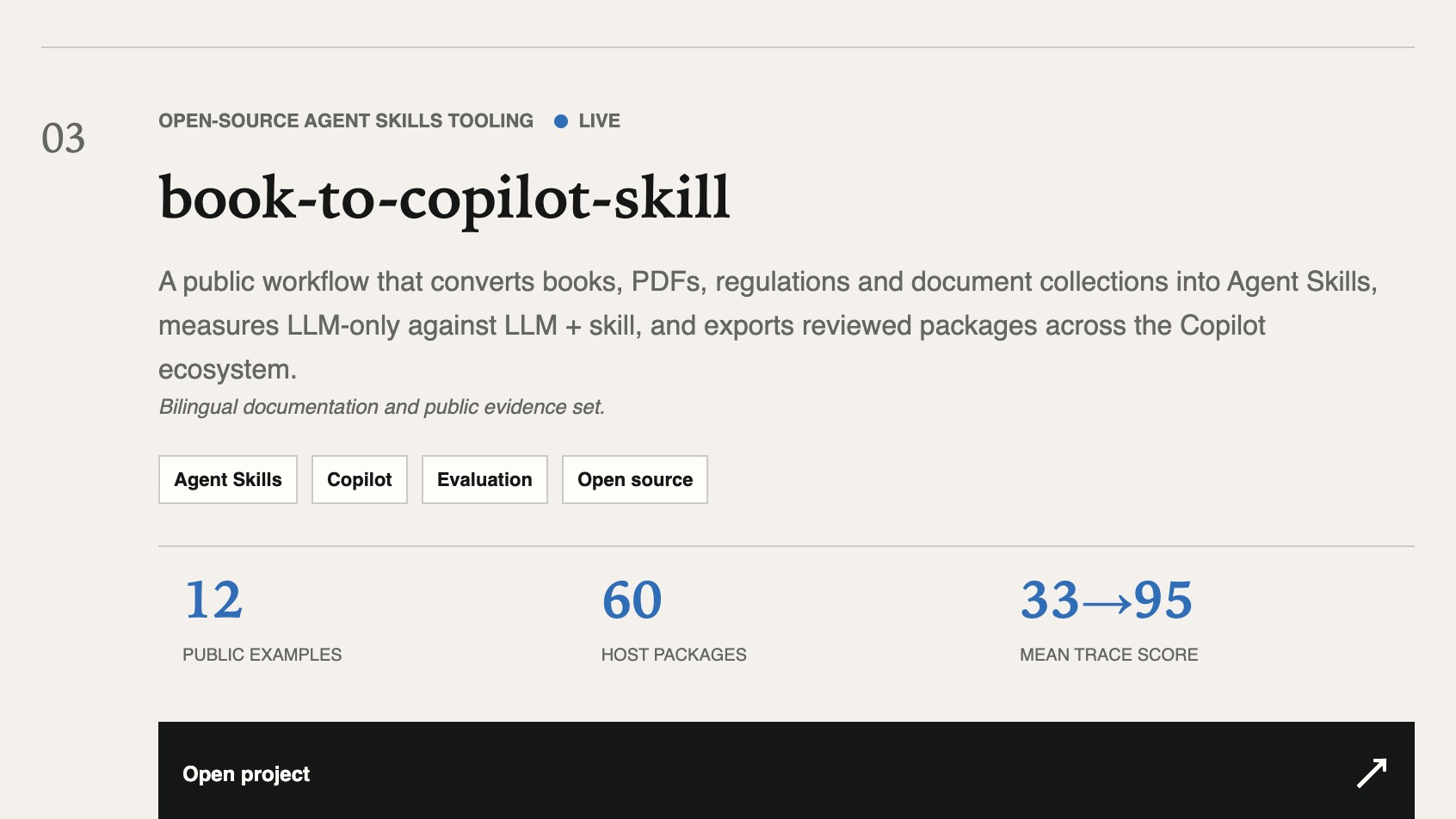
book-to-copilot-skill
An open-source workflow that converts books, PDFs, regulations, and document collections into Agent Skills packages. It compares each generated skill against an LLM-only condition, scores results at trace level, and exports reviewed packages for five Copilot surfaces.
- 12 public examples
- 60 host packages
- 33 → 95 mean trace score
Development log
Studio records more than final outcomes. Meaningful changes are dated, including the source-to-skill workflow becoming public, twenty data stories becoming full-screen worlds, and the Turkish skill files moving into a public repository.
That record distinguishes Studio from a content archive: it is where projects are developed with their evidence, not merely displayed after completion.
My role
I design and build Studio's product model, information architecture, and development log, along with the product strategy, experience, technical structure, measurement system, and release flow of the projects inside it.
Open Studio · Turkish Writing Skills · World Through Data · book-to-copilot-skill